Norgorber
The Reaper of Reputation, Father Skinsaw, The Gray Master, Blackfingers, King of Thieves
PFS Legal
Pantheons
Ascended Pantheon, Core Deities, Halfling Deities, Taldan Pantheon
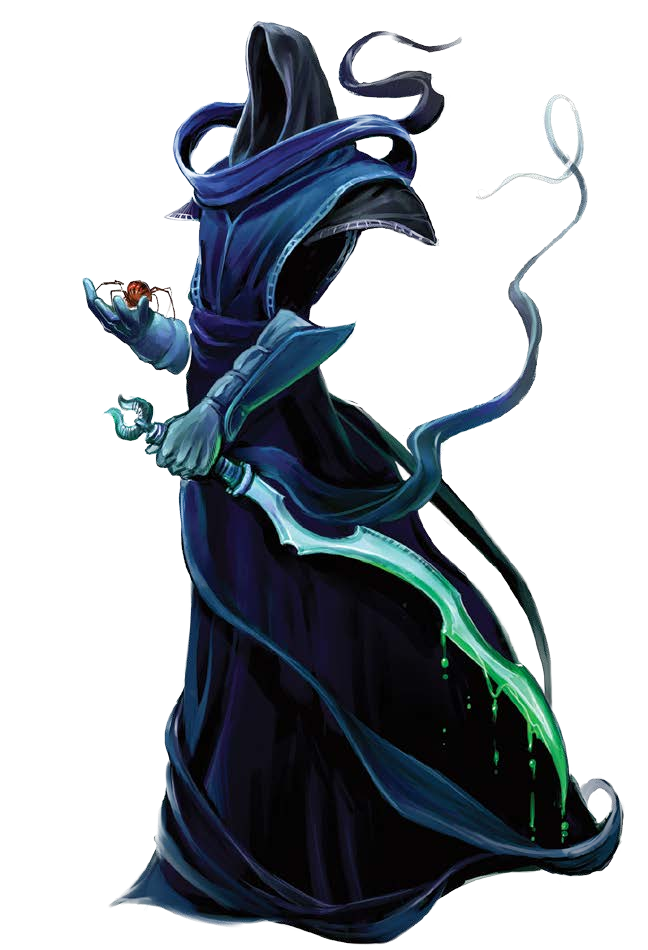
Norgorber (pronounced NOR-gore-ber) is an Ascended Taldan deity of thievery, assassination, and secrets, and is often worshiped as one of four aspects focused on one such purpose. He remains an enigma to most, his true motives are unknown, and many of his own followers remain ignorant of his plans and designs. Norgorber is the only evil deity amongst the Ascended.
- Alignment
-
NE
Neutral EvilMotivated by his own needs and wants, a neutral evil character is without conscience, acting only for self-gratification. He might surround himself with the trappings of cults and evil, but does so purely because it brings him closer to sin and wickedness. While a lawful evil person is inclined to bargain and a chaotic evil one to lash out, a neutral evil person is inclined only to look out for himself. In many ways, he epitomizes evil, since he has no clear loyalty to anything except absolute self-interest.
An extremist neutral evil character tends to be a loner, since he has either betrayed or slain those who came close to knowing him. - Nationality
- Taldan
- Areas of Concern
- Greed, murder, poison, secrets
- Favored Weapon
- Short sword
- Symbol
- One-eyed mask
- Sacred Animals
- Spider
- Sacred Colors
- Black, gray
- Worshipers
- Thieves, assassins, murderers, spies
- Worshipper Alignments
-
N
NeutralA neutral character is unusual in that she may have one of two distinct philosophies: she may be a person who is neutral because of distrust or apathy toward others, or one who wishes to have a truly neutral stance in the world and rejects extremism., LE
A neutral character could seem selfish or disinterested. She might be driven primarily by an acceptance of fate, and the most extreme followers of this alignment become hermits, hiding from the zealots of the world. Some neutral characters, however, strive openly for neutrality, and shun any act that veers too extremely toward any alignment. This type of neutral character prides herself on navigating her way between law and chaos, evil and good. She may have a fatalistic view in the face of nature and the fundamental power of night and day.Lawful EvilA lawful evil character goes about her business motivated by her own interests, but knows that ultimately order protects her. She seeks to achieve her own ends—but through order, not chaos. Even when boiling with anger, she is more likely to carefully plot vengeance than risk her own death through hasty actions. Sometimes that revenge will take years to happen, and that is acceptable., NE
A lawful evil character at the extreme end of the spectrum is zealous in her aims and will make any sacrifice to achieve them. Her twisted philosophy can make her paranoid of her closest followers, even family and friends. She stops at nothing to gain control, for only through control can she have peace. Yet even the most powerful and ordered society has its enemies, and to a lawful evil character only the destruction of those enemies can bring fulfillment.
Order is everything, at any cost.Neutral EvilMotivated by his own needs and wants, a neutral evil character is without conscience, acting only for self-gratification. He might surround himself with the trappings of cults and evil, but does so purely because it brings him closer to sin and wickedness. While a lawful evil person is inclined to bargain and a chaotic evil one to lash out, a neutral evil person is inclined only to look out for himself. In many ways, he epitomizes evil, since he has no clear loyalty to anything except absolute self-interest., CE
An extremist neutral evil character tends to be a loner, since he has either betrayed or slain those who came close to knowing him.Chaotic EvilA chaotic evil character is driven entirely by her own anger and needs. She is thoughtless in her actions and acts on whims, regardless of the suffering it causes others.
In many ways, a chaotic evil character is pinned down by her inherent nature to be unpredictable. She is like a spreading fire, a coming storm, an untested sword blade. An extreme chaotic evil character tends to find similarly minded individuals to be with—not out of any need for company, but because there is a familiarity in this chaos, and she relishes the opportunity to be true to her nature with others who share that delight. - Realms
- Duskfathom, Axis
- Centers of Worship
- Absalom, Galt, Nex, Osirion, River Kingdoms, The Shackles, Taldor, Varisia
Edicts
Keep your true identity secret, sacrifice anyone necessary, take every advantage in a fight, work from the shadows
Anathema
Allow your true identity to be connected to your foul dealings, share a secret freely, show mercy
Obedience
While moving through a crowd of people (at least six individuals), whisper a prayer to Norgorber so quietly that no one hears you. If you suspect a member of the crowd heard you, you must follow that individual and prick her with a poisoned needle or other sharp implement. If you can’t locate a suitable crowd, dig a hole at least 6 inches deep in the ground, whisper your prayers into the hole, and bury the sound. At the end of your obedience, dip a needle in poison and leave it on a road, jutting from a windowsill, or anywhere else a passerby might inadvertently prick herself. Gain a +3 profane bonus on Bluff checks and on Diplomacy checks to gather information.Divine Gift
Divine Gifts
The gods do not need to wait for mortals to call upon them for aid to grant boons. At times, when a character performs a particularly devout act or completes a legendary crusade, that character’s deity may choose to reward her with a divine gift.
The timing and frequency in which divine gifts are granted is left strictly to the discretion of the GM. They can be given to a particularly devout worshiper in a time of need. They might be granted upon the completion of a significant quest that furthers the faith. Or they might be rewards given in return for a significant sacrifice made in a deity’s name or dedication shown to the deity. A divine gift can be granted to any creature, even to a follower of a different deity or to a creature who does not worship the divine at all. The only restriction is that a creature must be sapient in order to receive a divine gift, for a creature always has the option to refuse the gift if it so wishes—the freedom to accept or reject such a gift is part of the nature of this boon. However, at the GM’s discretion, rejecting a divine gift from a deity you worship (or accepting a divine gift from a rival deity) may have repercussions.
Divine gifts can be of any power level, but the example gifts presented in the following section focusing upon the core pantheon are all on par with effects that could be granted by a miracle spell—feel free to adjust this power level as you prefer for your home campaign. At your discretion, you can allow divine spellcasters to duplicate the effects of a divine gift (as appropriate for their deity) by casting miracle themselves.
Source: Planar Adventures
Norgorber grants a permanent +1 untyped bonus to Dexterity.Antipaladin Code
Antipaladins who serve Norgorber are secretive and cunning. They prefer to strike from the shadows, even when the odds are already in their favor. They rely on traps, tricks, ambushes, and poison to weaken their foes. Their code reflects a cold and honest assessment of the human condition, and its tenets include the following adages.- Innocence is ignorance, and ignorance is weakness. I will seek to shed my own ignorance, and encourage ignorance in my enemies.
- I do not take credit, nor do I accept blame. I work always in the shadows.
- A fair fight is not worth fighting. I will take every advantage I can. No tool is beneath me.
- Cold eyes, cold heart. My enemies can expect no mercy from me.
- Everyone is expendable, and I will sacrifice them all as necessary.
- Each life I take shapes the future to my lord’s desires.
Boons
Deific Obedience
Required feat: Deific Obedience
Evangelist
Source: Inner Sea Gods
PFS Legal
Secrets and Lies (Sp)
Noxious Bomb (Ex)
Secret Self (Sp)
Exalted
Source: Inner Sea Gods
PFS Legal
Poison Tongue (Sp)
Masterful Poisoner (Ex)
Virulent Ally (Sp)
Sentinel
Source: Inner Sea Gods
PFS Legal
Virulence (Sp)
Poison Expertise (Ex)
Death Strike (Ex)
Domains
Charm, Death, Evil, Knowledge, Trickery
Subdomains
Alchemy, Captivation, Daemon, Deception, Espionage, Greed, Memory, Murder, Shadow, Thievery, Thought
Spells Requiring Worship
Unique Summon Rules
Source: Pathfinder #59: The Price of Infamy
- Summon Monster 3 : Human Natural Wererat Rogue 2 (extraplanar) PFS Legal
- Summon Monster 4 : Choker (extraplanar) PFS Legal
- Summon Monster 5 : Shadow Mastiff PFS Legal
Unique Spell Rules
Source: Inner Sea Gods
PFS Legal
Antipaladin — Clairaudience/Clairvoyance : can be prepared as a 2nd-level spell [Gray Master worshippers only]
Cleric, Warpriest
- Pernicious Poison : can be prepared as a 2nd-level spell [Blackfingers worshippers only]
- Nondetection : can be prepared as a 3rd-level spell [Reaper of Reputation worshippers only]
- Circle of Death : can be prepared as a 6th-level spell [Father Skinsaw worshippers only]
- Clairaudience/Clairvoyance : can be prepared as a 3rd-level spell [Gray Master worshippers only]